家 / ニュース & イベント /
 -
共有
-

-

-

-

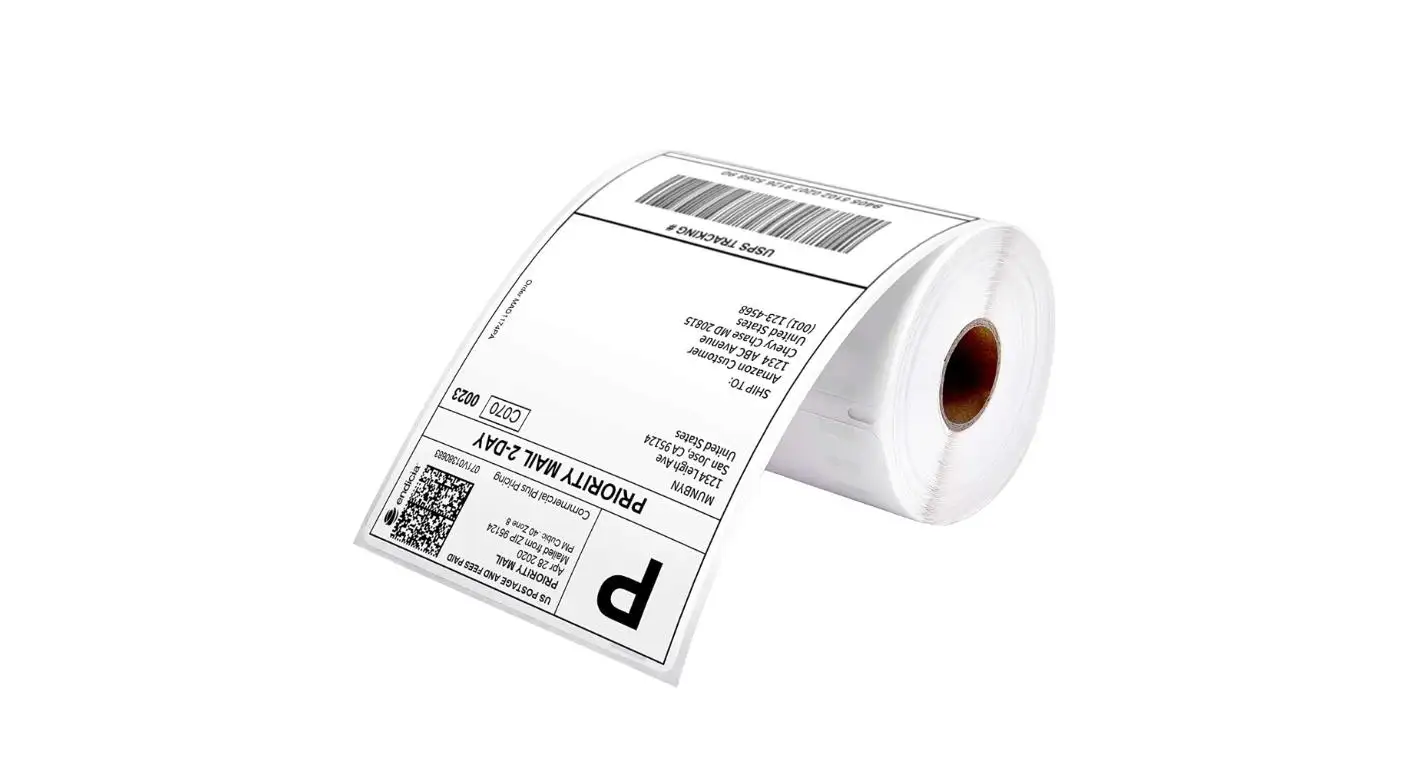
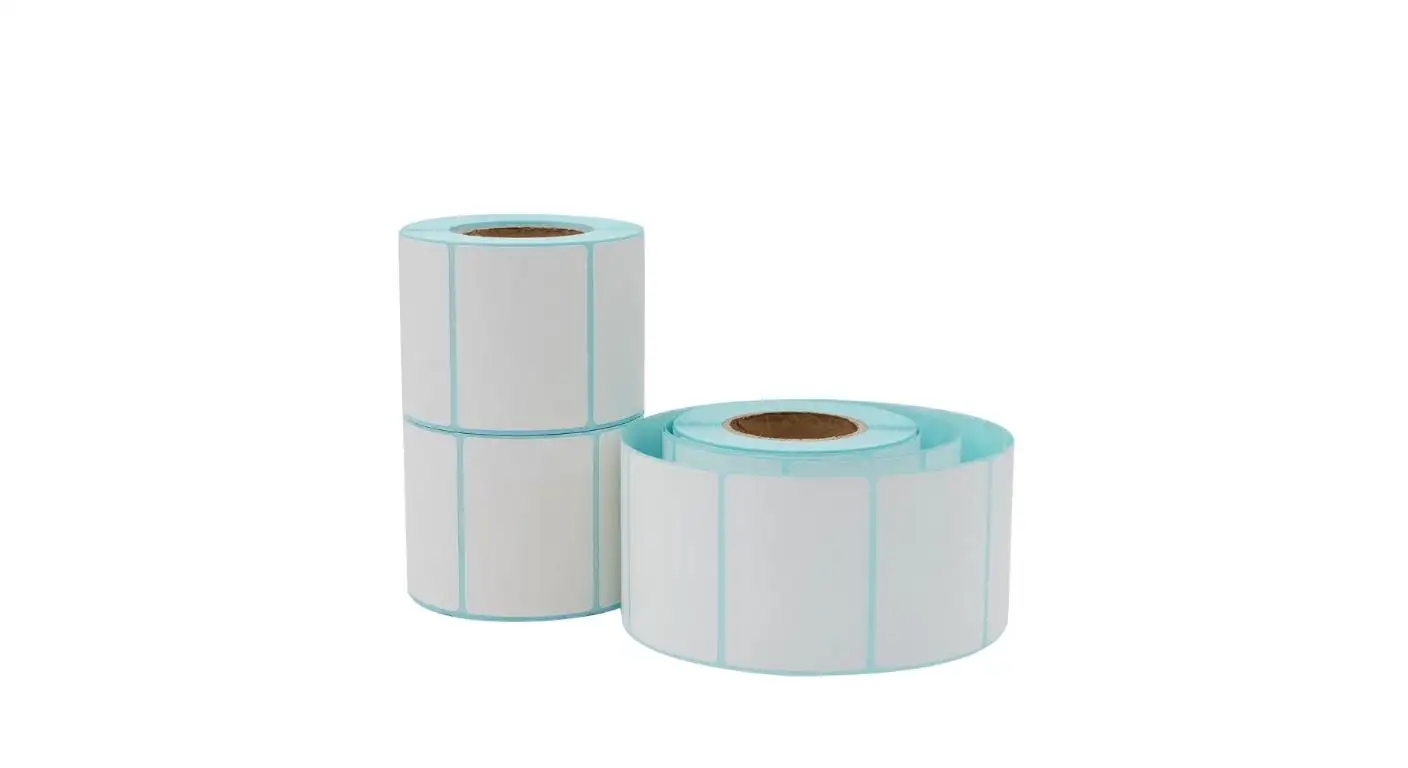
ザ 4 × 6" size has become a standardized shipping label size as it accommodates addresses, routing codes, tracking barcodes and carrier instructions while not taking up too much space on packages.

But just dimensions don't equate to fulfillment. 4x6 Thermal Shipping Labels also must correspond with the printer, release easily from the liner and adhere to the shipping container and maintain the contrast of the barcode during shipping.
The right label should not only look good right out of the press, it should also be evaluated throughout the shipping process.
Understand 4x6 Format
ある 4 × 6-inch label measures approximately 101.6 × 152.4 ミリメートル. The popular metric 100 × 150 mm is nearly equivalent, but not exactly the same.

This small difference could impact upon:
- Printer calibration
- Template alignment
- Label-gap detection
- Barcode position
- Print margins
- Carrier-generated PDF scaling
Jinbao's 配送ラベルサイズガイド will tell you why 4×6 inch and 100×150mm are the most popular sizes for courier, 電子商取引 & warehouse shipping labels.
The software page size should be the same as the physical label prior to printing. Barcodes can be resized and/or repositioned by automatic “fit to page” settings.
| Label Format | 寸法 | Main Advantage | Key Check |
| 4 × 6 インチ | 101.6 × 152.4 ミリメートル | Common courier and e-commerce format | Printer template must use inch dimensions |
| 100 × 150 ミリメートル | 100 × 150 ミリメートル | Common international metric format | Avoid automatic scaling from 4 × 6 |
| Roll labels | Continuous roll format | Compact and suitable for desktop printers | Confirm core and outer diameter |
| Fanfold labels | Stacked folded format | Fewer media changes at busy stations | Protect stack from dust and moisture |
| Large-core roll | Usually for industrial printers | Supports high-volume continuous printing | Confirm printer media capacity |
Match the Label to the Printer
The majority of 4x6 shipping labels are meant to be used with direct thermal printers. インクなし, toner or ribbon needed as the printhead activates the heat sensitive coating.
Confirm:
- Compatibility for direct thermal printers.
- Maximum printable width
- Roll fed or fanfold feeding.
- ギャップ, black-mark or continuous sensing (CTAの).
- Core diameter
- Maximum roll diameter
- Print resolution
- Driver page settings
Smaller rolls and outer diameters are typically used with desktop printers, whereas larger ones might be used in industrial printers. Even if the face material is compatible, it may not work if the roll does not fit in the printer compartment.
金宝兄さんの custom thermal label rolls どうぞ 4 × 6″ and 100 × 150 mm sizes and have various roll and core options.
Protect バーコード Scannability
Shipping labels that can be scanned in a flash with automated sorters and handheld scanners are successful.
The factors affecting the performance of bar code are:
- Dark print density
- Sharp bar edges
- Correct dimensions
- Sufficient quiet zones
- Flat label application
- Clean background
- Printer resolution
- Surface reflectivity
Never center the label on a seam, corner, tape edge or damaged area of a carton. When the original print file is correct, wrinkles and curves can be a problem, causing the barcode to be distorted.
Test scans should be done after the label has been applied to the package and not just while it is on the liner.
Choose コーティング for Shipping Environment.
Standard direct thermal labels can be sufficient for clean/dry/shorter duration shipping. More challenging courses can lead to labels being exposed to rain, 凝縮, 埃, oil and conveyor friction.

Top coated media is type of media that has a protective coating on top that can enhance moisture and abrasion resistance. 金宝 top coated thermal label paper rolls come in 4″ x 6″ and 100 ミリメートル×。 150 mm sizes and can be used for shipping and postage.
Consider coating needs with regard to:
- Delivery duration
- Outdoor exposure
- Cold-chain condensation
- Conveyor contact
- Warehouse dust
- Package handling
- Required image life
Any coating that is more protective will only be of value if it does not interfere with the printer's heat control.
Make sure that the Match Adhesive matches the Package.
Not only clean corrugated cartons have shipping labels applied to them. These are typically recycled cardboard, ポリメーラー, stretch film and plastic totes.
Surface texture, 温度, contamination and package flexibility are all important factors in adhesive performance.
Possible options include:
- Permanent Carton & parcel Adhesive
- A sticky substance for rough board.High tack adhesive for rough board.
- Adhesive that can be used for cold-chain packaging at no cost.
- Adhesive material for removable containers which can be used more than once.
- Adhesive that can be used on plastic compatible poly mailers.
Label real packaging material with test labels. Ensure that initial tack, edge lifting and final bond are satisfactory following storage and handling.
Jinbao's adhesive thermal waybill labels can be used in 4" × 6" format with permanent or custom adhesive.

Inspect Release liner and Die Cutting
The release liner is a factor which influences the smoothness of the feeding and dispensing of the labels. Unstable release force can result in premature peeling, labels that stick to the liner or a disruption of automated application.
Inspect:
- Consistent label gaps
- Clean die-cut edges
- Liner is not cut anywhere
- Stable release force
- No adhesive bleed
- Accurate label dimensions
- Even roll winding
Die cutting needs to be done so that it does not harm the liner and separates the face material. Liner breaks can be produced in high speed printing if cutting pressure is too great.

Check Roll Direction and Configuration
The roll structure is not only packaging information, it is an operation specification.
Confirm:
- Core diameter
- Roll outer diameter
- Labels per roll
- Winding inside/outside
- Leading-edge direction
- Label gap
- Roll width
- Maximum number of splices is 80.
Label should be printed in the correct print orientation for application immediately after printing. Packing stations can be slowed by having to rotate the labels or reload media due to incorrect winding.
A fanfold label is a good solution for a high-volume stationary workstation, where it can minimize roll changes, しかし, the labels must be stored in a clean, protected area, or dust and folding damage can result.
Testing as Real Fulfillment Conditions.
A complete logistics route can not be reproduced in a short print test. プリンター, handling and actual packages should be included in validation.
チェック:
- Continuous printing
- Barcode scanning
- Label dispensing
- Adhesion after 24 営業時間
- Conveyor friction
- Moisture exposure
- Low-temperature storage
- Carton stacking
- Final delivery readability
Try more than one sample from the top of a carton. This aids in highlighting any batch, winding and die-cutting variation.
| Problem | Possible Cause | チェック |
| Barcode will not scan | Low contrast or incorrect scaling | Print density, size and quiet zones |
| Label lifts from carton | Unsuitable adhesive or dusty surface | Package surface and final bond |
| Printer skips labels | Incorrect sensor or inconsistent gap | Sensor setting and die-cut spacing |
| Labels jam during printing | Wrong roll diameter or damaged liner | Roll configuration and liner condition |
| Image fades in transit | 熱, moisture or abrasion exposure | Coating grade and shipping environment |
| Label peels inside printer | Release force too low | Liner and adhesive converting quality |
| Text prints off-center | Wrong page size or calibration | Driver dimensions and media calibration |
Keep 熱の Labels in a proper manner.
Unused labels and printed pictures may be impacted by heat, 日光, 湿気, オイル, solvents or plasticizers.
Store label rolls:
- In sealed original package(s)
- In a cool, 乾燥地帯
- Out of the sun's rays
- Out of the chemicals and PVC!
- Off warehouse floors
- Using first in first out rotation
Do not store rolls near loading doors, heaters or the interior of vehicles. Poor storage will alter the adhesive characteristics and thermal image quality prior to getting to the printer.
Final 選考 チェック
Reliable 4x6 Thermal Shipping Labels need to have accurate dimensions, be compatible with the printer, have clean die cutting, stable release, an appropriate adhesive and long-lasting bar code output.
Approval to be based on ongoing printing and applied package testing under true fulfillment conditions. Jin Bao Brother provides 4 × 6" そして 100 × 150 mm thermal labels with customized coatings, 接着剤, cores and roll configurations for e-commerce and logistic applications.
FAQ
第1四半期. Are 4 × 6 inches and 100 × 150 mm the same size?
They are a near, but not equivalent, デュプリケート. The printer drivers and label templates should be the same size as the physical media.
Q2. Are thermal shipping labels 4x6" インクレス?
Direct thermal labels do not use any ink, toners or ribbons. The image is created by heating the sensitive coating on the label by the printer.
Q3. What kind of glue can be used for shipping cartons?
たいていは, clean corrugated cartons are glued together with a permanent adhesive. A more special adhesive may be needed for rough, リサイクル, frozen or plastic surfaces.
第4四半期. Why can't a printed shipping barcode be scanned?
It could be due to low contrast, improper scaling, しわ, inadequate quiet zones and/or bad printhead condition. Perform a test after the label is put on the package.
Q5. Are 4x6 label rolls available to be customized by Can Jin Bao Brother?
はい. Core size, ロール径, 接着剤, coating and winding direction and packaging will be custom designed according to the requirements of the printer and application.
私たちは内側に戻ります 24 時間